
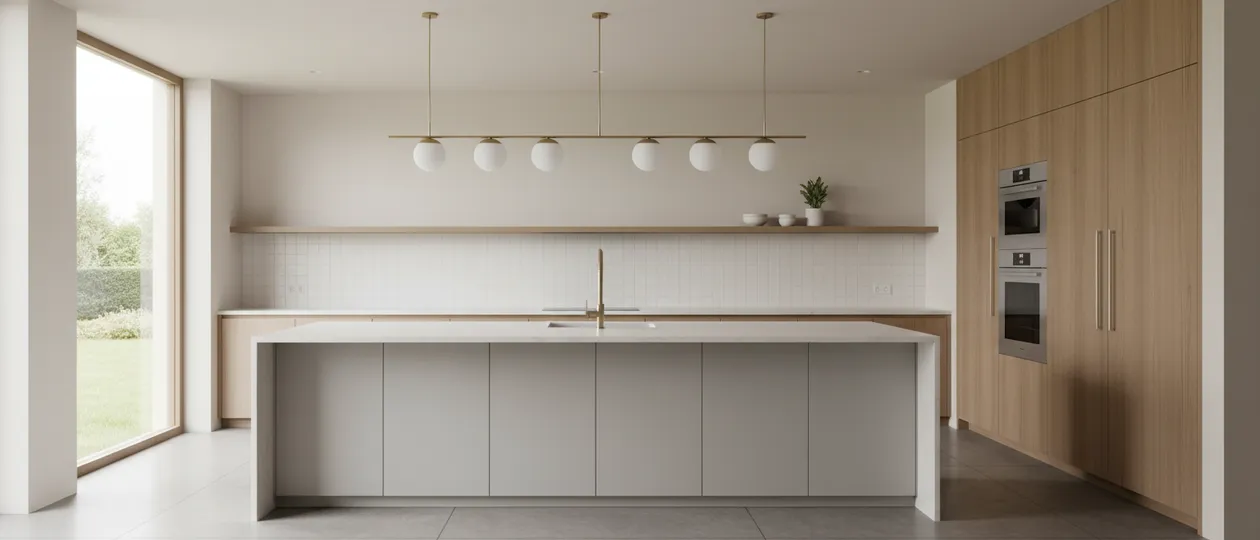
The kitchen is the most renovated room in the house — and for good reason. It’s where families gather, where meals are prepared, and often the room that adds the most value to your home. It’s also one of the most complex rooms to renovate, with plumbing, electrical, and ventilation all converging in one space.
This guide covers everything you need to plan a successful kitchen renovation, whether you’re doing a cosmetic refresh or a complete gut renovation.
Defining your kitchen renovation scope
Not all kitchen renovations are created equal. The scope of work can range from a weekend of painting to a months-long structural overhaul. Understanding where your project sits helps you budget and plan accurately.
Levels of kitchen renovation
Cosmetic refresh ($5,000-$15,000)
- Repaint or reface cabinet doors
- New worktops/countertops
- Updated hardware (handles, knobs)
- New backsplash/splashback
- Updated lighting fixtures
Mid-range remodel ($15,000-$50,000)
- New cabinets
- New countertops
- New appliances
- Updated flooring
- New lighting (potentially with electrical changes)
- Minor plumbing changes (new tap/faucet, same location)
Full renovation ($50,000-$100,000+)
- Complete layout change
- Structural work (removing walls, adding windows)
- New plumbing and electrical throughout
- Premium materials and appliances
- Custom cabinetry
- Potentially moving or extending the kitchen footprint
Be honest about which level matches your budget and your needs. A well-executed mid-range remodel often delivers more satisfaction than an overstretched luxury renovation.
Planning your kitchen layout
Layout is the foundation of a functional kitchen. Before you choose a single material, work out how the space should flow.
The classic kitchen layouts
Galley kitchen — two parallel runs of cabinets with a walkway between them. Efficient for small spaces. Works best when 900mm-1200mm (36”-48”) between runs.
L-shaped kitchen — cabinets along two adjacent walls. Good for open-plan living. Leaves room for a dining table.
U-shaped kitchen — cabinets on three walls. Maximum storage and worktop space. Needs a room at least 3m x 3m (10’ x 10’).
Island kitchen — any layout plus a freestanding island. Great for socialising and extra prep space. Needs at least 1m (40”) clearance around the island.
Peninsula kitchen — like an island, but one end connects to a wall or cabinet run. Good compromise when there’s not enough space for a full island.
The work triangle
The classic kitchen design principle: position your sink, cooker/stove, and fridge in a triangle, with each leg between 1.2m-2.7m (4’-9’). This minimises unnecessary walking while you cook. While modern kitchens don’t always follow the triangle strictly, it’s a useful starting framework.
Storage planning
Kitchen storage is always at a premium. Plan for:
- Base cabinets — deep drawers are more accessible than cupboards with shelves
- Wall cabinets — useful but ensure they don’t make the room feel closed in
- Tall cabinets — great for pantry storage and housing integrated appliances
- Corner solutions — lazy Susans, pull-out carousels, or L-shaped drawers make corners usable
- Open shelving — looks great but requires discipline to keep tidy
Count your current items and add 20%. You’ll always accumulate more kitchen equipment over time.
Choosing materials
Material choices affect both the look and the longevity of your kitchen. Here’s what you need to decide:
Countertops/worktops
| Material | Price range | Durability | Maintenance |
|---|---|---|---|
| Laminate | $ | Moderate | Low |
| Solid wood | $$ | Moderate | High (oiling) |
| Quartz (engineered) | $$$ | High | Low |
| Granite | $$$ | High | Moderate (sealing) |
| Marble | $$$$ | Moderate | High (staining) |
| Porcelain | $$$ | High | Low |
For most renovators, quartz offers the best balance of durability, aesthetics, and maintenance. Natural stone looks beautiful but requires more care.
Cabinets
Cabinets typically consume 30-40% of a kitchen renovation budget. Key decisions:
- Material — solid wood, plywood with veneer, or MDF with foil/lacquer finish
- Construction — frameless (European-style, more internal space) vs framed (traditional, more robust)
- Door style — flat/slab (modern), shaker (transitional), raised panel (traditional)
- Finish — painted (versatile, can be refreshed), stained wood (warm, natural), high-gloss lacquer (contemporary)
Flooring
Kitchen flooring needs to be water-resistant, durable, and easy to clean:
- Porcelain tile — the gold standard for kitchens. Waterproof, durable, huge range of styles
- Luxury vinyl tile (LVT) — warm underfoot, waterproof, softer than tile, looks increasingly realistic
- Engineered hardwood — warmer look than tile, but less water-resistant. Avoid near sinks.
- Natural stone — beautiful but expensive and requires sealing
Appliances
Plan your appliance selection early — they affect your layout, your electrical requirements, and a significant portion of your budget.
Priority order for most kitchens:
- Oven and hob/cooktop — choose gas, electric, or induction. Induction is increasingly popular for efficiency and safety.
- Fridge-freezer — integrated (built into cabinetry) or freestanding. Measure carefully.
- Dishwasher — near the sink for plumbing convenience
- Extractor/range hood — ducted extraction is always better than recirculating
- Extras — warming drawer, wine fridge, boiling water tap, built-in coffee machine
Buy the best appliances you can afford. They’re used daily and good ones last 10-15 years.
Kitchen renovation timeline
Planning phase (4-8 weeks)
- Define your scope and budget
- Research and select a contractor
- Finalise layout and material selections
- Get detailed quotations
- Order materials (cabinets often have 4-8 week lead times)
- Apply for any required building permits or planning permission
Construction phase (6-12 weeks)
A typical kitchen renovation follows this sequence:
- Strip out (2-3 days) — remove old kitchen, flooring, and any wall coverings
- Structural work (1-2 weeks) — if removing walls, adding steels, or changing openings
- First fix (1-2 weeks) — rough plumbing, electrical wiring, any underfloor heating
- Plastering (3-5 days) — walls and ceilings made good
- Drying time (1-2 weeks) — plaster needs to dry before decoration
- Flooring (2-3 days) — tile or LVT installation
- Kitchen installation (1-2 weeks) — cabinets, worktops, splashback
- Second fix (3-5 days) — final plumbing connections, electrical sockets, switches, lighting
- Decoration (2-3 days) — painting walls and ceilings
- Appliance installation (1-2 days) — connecting and testing all appliances
- Snagging (1-2 days) — final inspection and defect correction
Managing lead times
The biggest cause of kitchen renovation delays is materials arriving late. Order these early:
- Cabinets — 4-8 weeks for standard, 8-12 weeks for custom
- Countertops — 2-4 weeks after templating (which happens after cabinets are installed)
- Tiles — check stock levels. Special-order tiles can take 4-6 weeks
- Appliances — most are available quickly, but specific models may have longer lead times
Common kitchen renovation mistakes
Learn from others’ experience:
1. Underestimating the budget
Add a contingency of at least 15% to your budget. Once you start opening up walls and floors, surprises are common — old plumbing that needs replacing, electrical wiring that’s not up to current code, or damp that wasn’t visible before.
2. Prioritising aesthetics over function
A kitchen needs to work well every day. Before choosing that beautiful but impractical material, ask: will this still be practical with kids, pets, and daily cooking?
3. Not enough sockets/outlets
You can never have too many electrical sockets in a kitchen. Plan for all your countertop appliances and add a few more. Retrofitting sockets after the kitchen is installed is expensive and disruptive.
4. Poor lighting
Layer your kitchen lighting:
- Task lighting — under-cabinet lights for worktop illumination
- General lighting — ceiling lights or recessed downlights for overall brightness
- Accent lighting — in-cabinet lighting or pendant lights for atmosphere
5. Ignoring ventilation
A good extractor fan isn’t optional. Cooking produces moisture, grease, and odours. Without proper extraction, you’ll get condensation, sticky surfaces, and lingering smells. Always duct externally if possible.
6. Not living with the layout
If you’re changing your kitchen layout, tape out the new positions on the floor and “cook” in the space for a few days before committing. This reveals problems with flow that you won’t spot on a plan.
Kitchen renovation costs by budget tier
| Budget tier | What you get | Typical cost |
|---|---|---|
| Budget refresh | Repaint cabinets, new hardware, new backsplash | $3,000-$8,000 |
| Mid-range remodel | New cabinets, countertops, appliances, flooring | $15,000-$40,000 |
| Premium renovation | Custom cabinets, stone countertops, high-end appliances | $40,000-$75,000 |
| Luxury overhaul | Structural changes, bespoke design, top-tier everything | $75,000-$150,000+ |
These ranges are indicative. Actual costs depend heavily on your location, the size of your kitchen, and the specific materials and appliances you choose.
Ready to plan your kitchen renovation?
A successful kitchen renovation starts with a clear plan. Knowing your scope, budget, and timeline before you approach contractors means better quotes, fewer surprises, and a kitchen you’ll love using every day.
Join our early access to create your free kitchen renovation project brief with Aikitektly — and get better quotes from day one.